We live in an era where technology is rapidly advancing, and with it, the demand for automation is increasing day by day. One significant development that has taken the world by storm is servo motors. These compact but powerful devices have transformed the field of robotics and automation. With their unique features and versatile applications, servo servo motor servo drive micro servo servo motor arduino rc servo servo amplifier remote control servo servo amp arduino and servo motor arduino motor stepper linear servo ac servo motor dc servo motor have become a household name in the engineering industry. In this blog, we will explore the wonders of servo motors and how they are shaping the future of automation.
Servo What? Understanding the Basics of Servo Motors
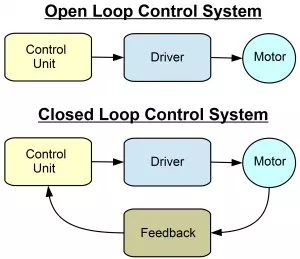
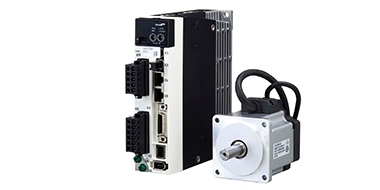
If you are new to the world of automation, let’s start with the basics. A servo motor is a highly precise electric motor that incorporates a closed-loop system to ensure accurate control over its speed, position, and acceleration. The key components of a servo motor are the servo drive and the servo amplifier, which work together to receive signals from the controller and convert them into motion. The use of micro servos has become increasingly popular due to their small size, low cost, and high efficiency.
Unleashing the Power of Arduino in Servo Motors
Arduino has been a game-changer in the world of electronics and robotics. With its open-source platform, it has made it possible for anyone to develop complex automation projects with ease. The combination of servo motors and Arduino has opened up a whole new world of possibilities. From DIY projects to industrial automation, the use of servo motors controlled by Arduino has become ubiquitous. With the help of software and programming, one can achieve precise control and customization of servo motors as per their specific requirements.
The Many Applications of Servo Motors
Servo motors have a vast array of applications in various fields, including robotics, aerospace, automotive, and more. They are widely used in the industry for precise control over cutting machines, 3D printers, CNC machines, and cameras. In the world of robotics, servo motors have become a vital component in robot arms, grippers, and other moving parts. Their ability to rotate at specific angles and hold positions makes them perfect for such applications. With the advancements in nanotechnology, servo motors are now being used in micro-robots for medical procedures, making it easier for surgeons to perform delicate surgeries with precision.
The Benefits of Using Servo Motors
The use of servo motors comes with numerous benefits that make them stand out from other types of motors. One of the significant advantages is their high precision and accuracy, achieved by using a feedback loop system. This makes them ideal for applications that require repetitive movements with consistent results. The low inertia of servo motors allows them to start, stop, and reverse quickly, making them suitable for applications that need high acceleration and deceleration. Additionally, servo motors have a high torque-to-weight ratio, making them extremely powerful despite their small size. These features make them a top choice for tasks that require speed, precision, and power.
The Future of Servo Motors
The potential of servo motors is yet to be fully realized, as more research and development is being done to improve their capabilities. With the rise of artificial intelligence and machine learning, servo motors are becoming smarter and more efficient. The integration of IoT technology has resulted in the emergence of wireless servo motors, eliminating the need for bulky cables and making them more versatile and convenient to use. The advancements in material science have also led to the development of high-temperature servo motors, expanding their applications in extreme conditions. With such developments, we can expect to see further innovations and applications of servo motors in the near future.
The Verdict
Servo motors have undoubtedly changed the game when it comes to automation. Their precision, power, and versatility have revolutionized the way we approach tasks that require precise control over motion. The combination of servo motors with other emerging technologies has opened up a whole new world of possibilities, making them an indispensable component of any automation project. As we continue to embrace automation and robotics, the demand for servo motors will only increase, leading to further advancements and innovations in this remarkable technology.
So, next time you see a robot moving with precise and fluid movements, remember that it’s all thanks to the extraordinary capabilities of servo motors. We are excited to see what the future holds for this technology, and we can’t wait to be a part of its journey!